
Project Description
Membership Program – Planning Tools
We explored how younger members want help managing their money—and where current financial tools fall short. The challenge wasn’t lack of information, it was trust, clarity, and knowing what to do next.
The goal: identify what actually drives adoption of financial planning tools for people in their mid‑20s to mid‑30s, and what a compelling, member‑friendly solution should look like.
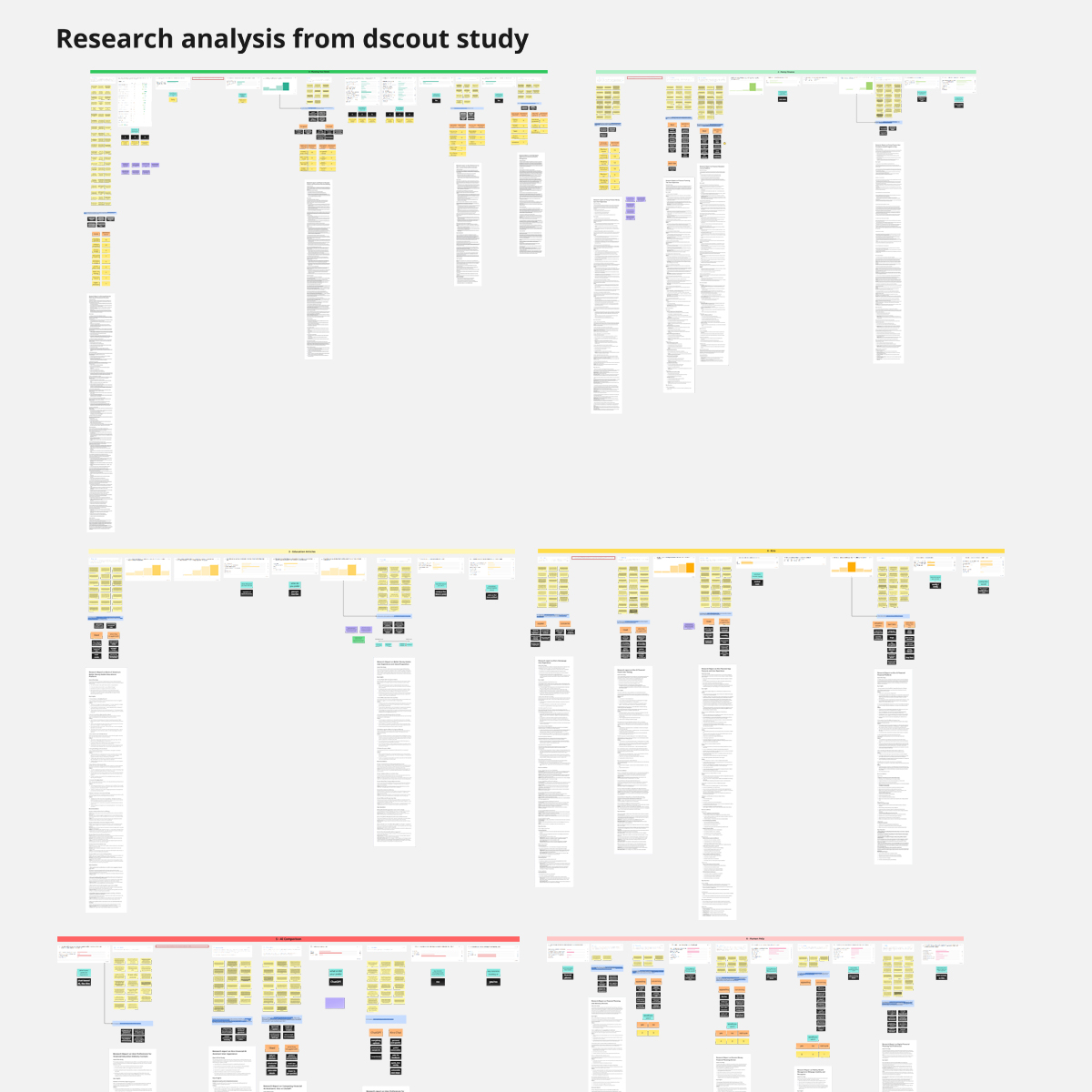
This analysis was part of a broader research initiative focused on evolving our membership program. The work aimed to identify opportunities to strengthen our offerings and uncover new ways to deliver meaningful, everyday value to our members.
Research
Key Findings
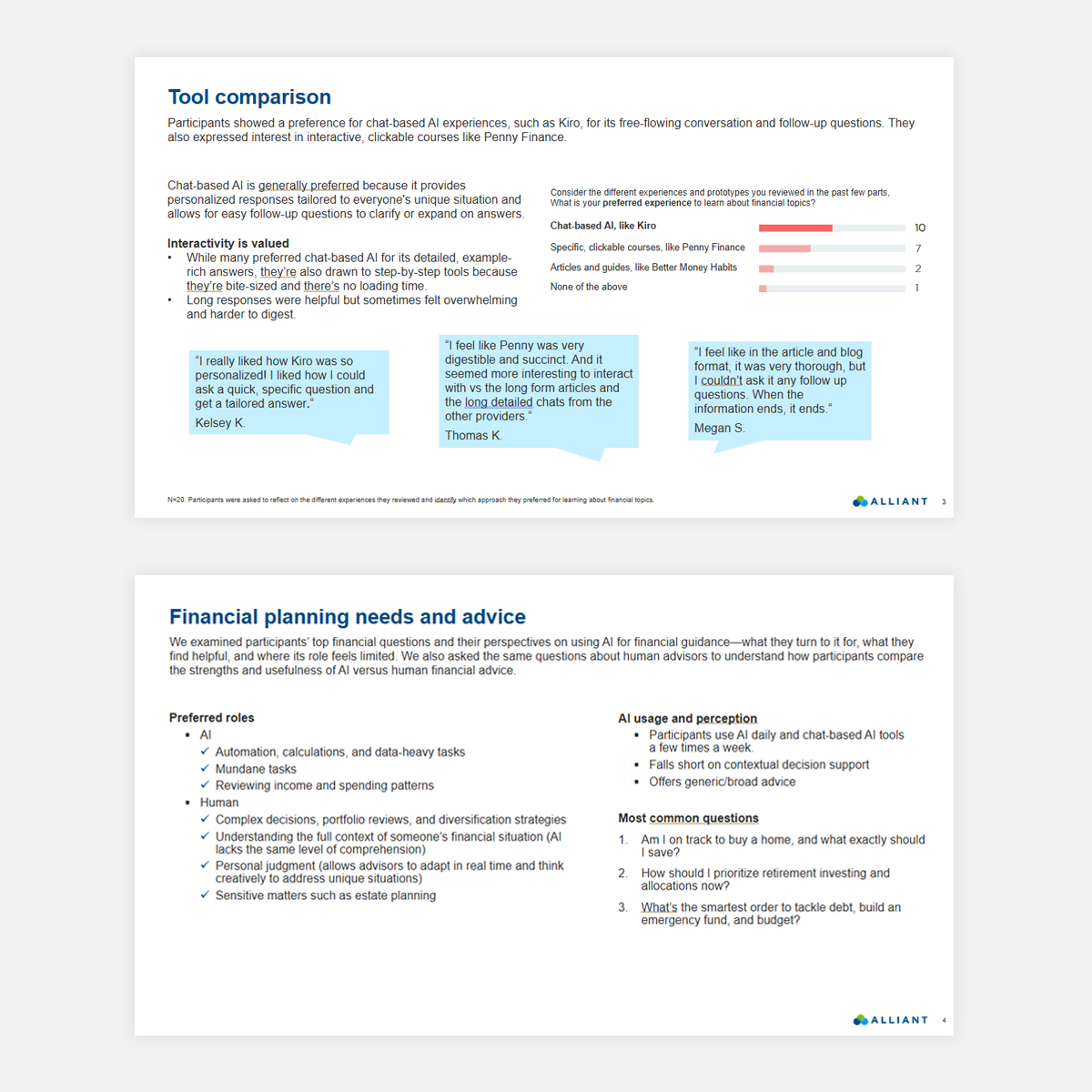
AI is preferred—but only for the right jobs
Chat-based AI experiences were the most popular overall because they’re:
- Personalized
- Easy to ask follow‑up questions
- Available in the moment
That said, AI fell short for nuanced, high‑stakes decisions. Participants consistently wanted human validation for complex planning and sensitive topics.
Interactivity beats information
People didn’t want more content—they wanted guidance.
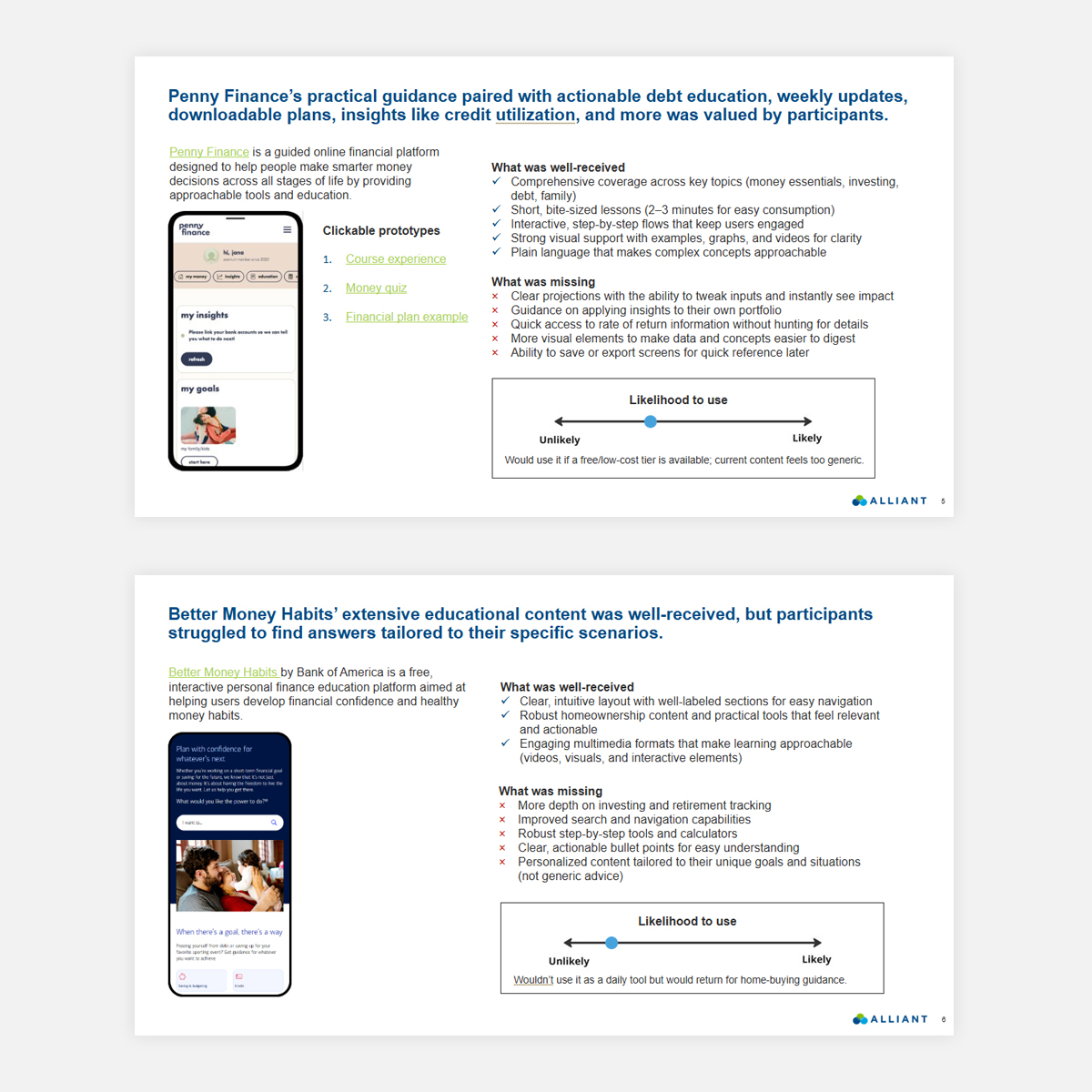
- Bite‑sized, step‑by‑step tools were easier to digest than long articles or dense chat responses
- Visuals, calculators, and examples built confidence
- Long explanations without a clear next step felt overwhelming
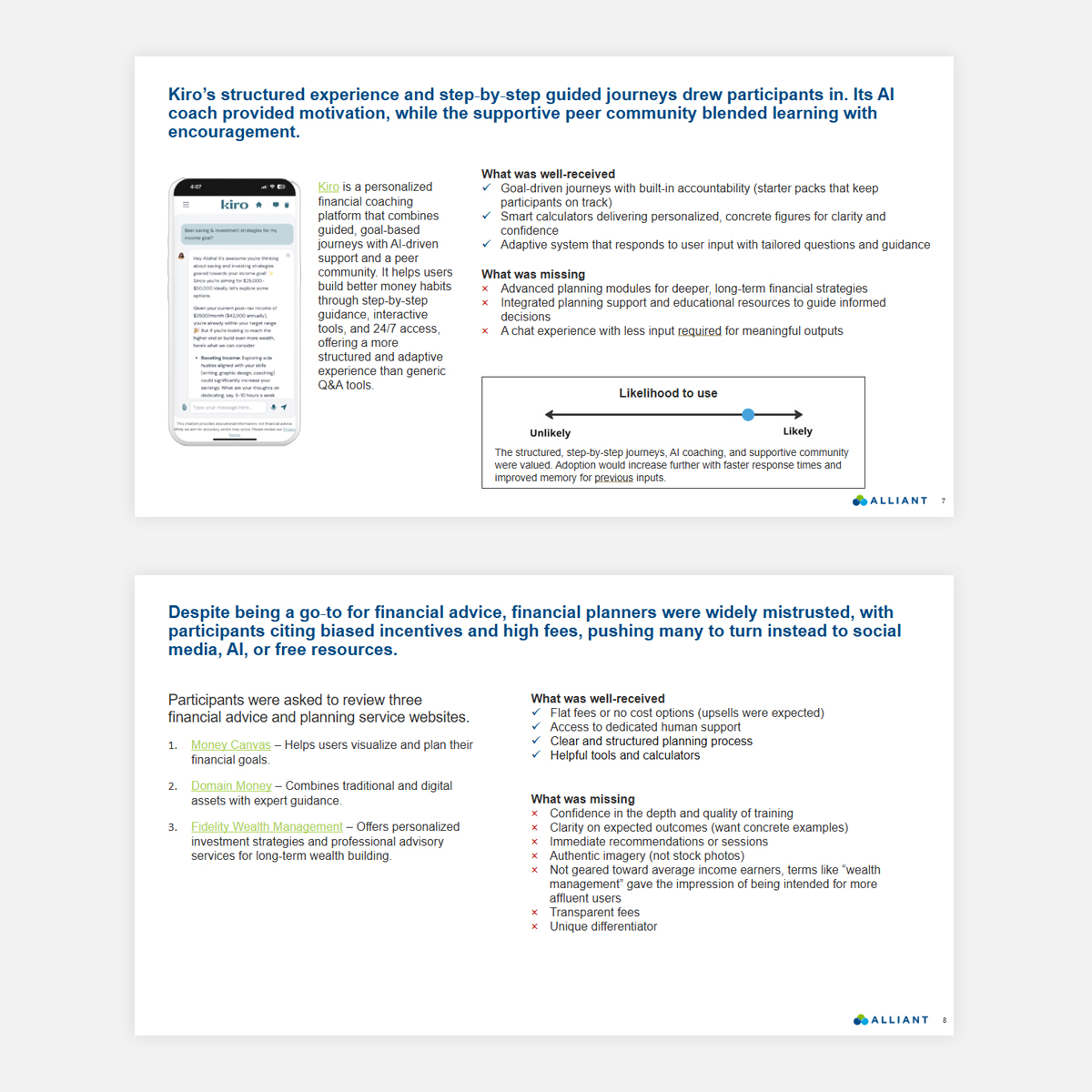
Traditional financial advisors were still seen as the “gold standard,” but:
- High fees
- Perceived bias
- “Wealth management” language
…pushed many participants away. Transparency, plain language, and clear reasoning mattered more than prestige.
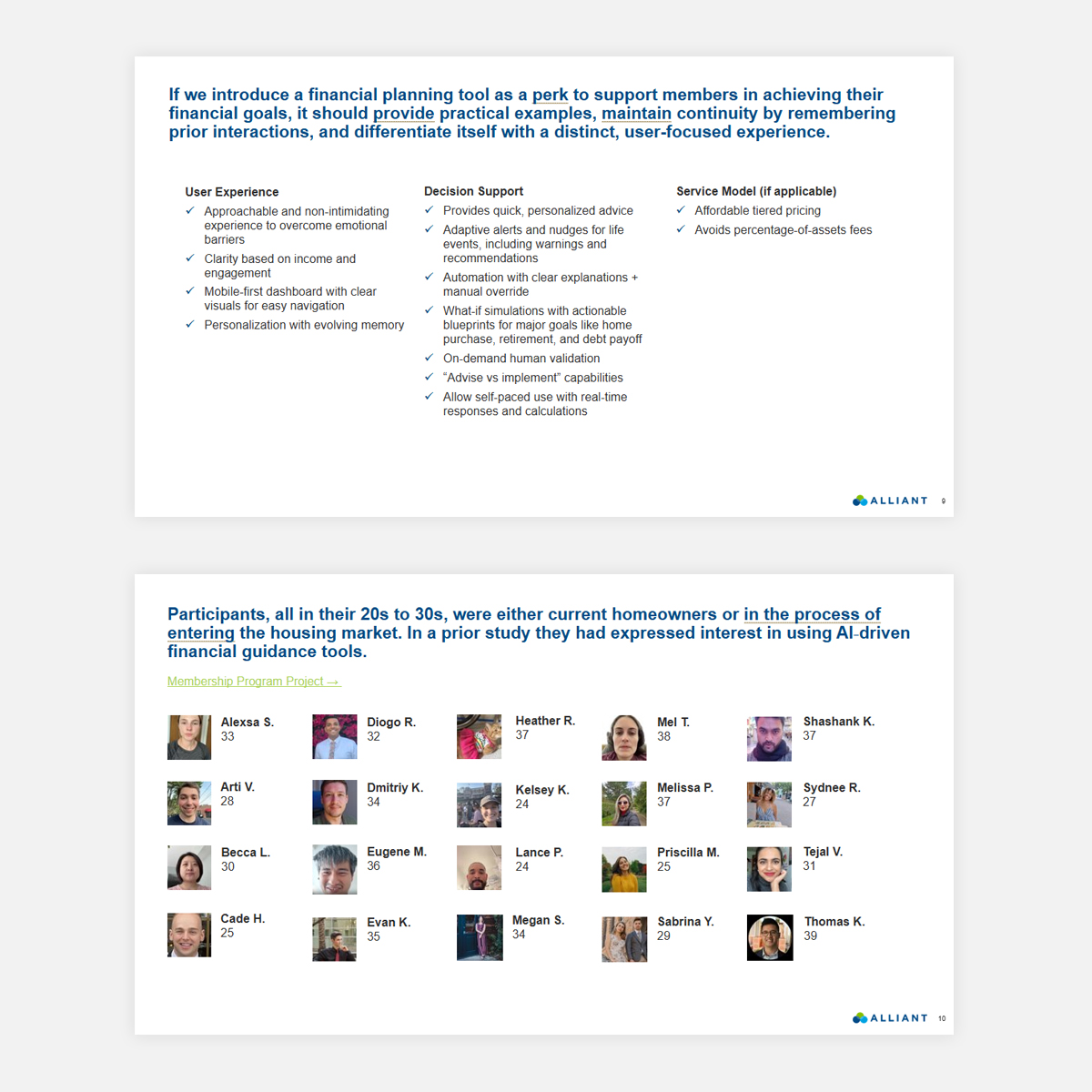
What people actually want from a planning tool
Across tools and formats, the strongest signals were consistent:
- Clear recommendations with explanations
- The ability to tweak inputs and instantly see impact
- Continuity over time (tools that remember prior context)
- Optional, on‑demand human support
- Affordable, straightforward pricing
Conclusion
The research pointed to a clear opportunity: a hybrid financial planning experience that combines the speed and personalization of AI with human support when it counts.
The ideal solution:
- Feels approachable and non‑intimidating
- Offers quick, personalized advice with clear next steps
- Supports self‑paced, asynchronous use
- Uses AI for calculations and scenarios, not blind decision‑making
- Builds trust through transparency, not promises
This case study reinforced that good financial experiences aren’t about smarter algorithms—they’re about reducing stress, building confidence, and helping people act.
For me, this work highlights the importance of designing decision support, not just information delivery. When tools respect people’s emotions, context, and trust boundaries, adoption follows.